
One of the biggest challenges for General Managers, Project Management Consultants (PMC), and Procurement Teams when planning commercial interiors is the lack of cost transparency in the market. Most carpet vendors do not publish indicative pricing guidelines, making it difficult to prepare an accurate initial Bill of Quantities (BOQ / RAB).
This guide provides a transparent commercial carpet cost structure, covering key price variables, estimated costs per square meter (m²), and hidden expenses that are often overlooked.
1. Core Components of Commercial Carpet Costs
The total cost of a commercial carpet project involves much more than just the price of the carpet material per square meter. There are 5 main components that make up the Total Project Cost:
- Primary Carpet Material: Determined by fiber type (Wool, Nylon, Polypropylene), construction technique (Axminster, Tufted, Carpet Tile), and pile weight.
- Underlayer / Padding: A cushioned underlayment installed beneath the carpet that enhances foot comfort, improves acoustic insulation, and extends carpet lifespan by 30–50%.
- Adhesives & Accessories: Specialized anti-bacterial carpet glue, tack strips, carpet seaming tape, and aluminum edgings/stair nosing.
- Installation & Freight Services: Site measurement, floor preparation (self-leveling), professional installation labor, and logistics to the project site.
- Waste Factor: An additional percentage of carpet material required for edge trims, corner fittings, and pattern matching.
Note: Indicative material prices vary depending on order volume, custom pattern complexity, and currency exchange rates for imported raw materials.
2. Hidden Costs to Anticipate in Carpet Budgeting
Many project managers face budget overruns because they fail to account for the following variables in their initial cost planning:
- Uneven Floor Screed (Floor Preparation): Commercial carpets require a smooth, flat, and moisture-free subfloor. If the concrete screed is cracked or uneven, subfloor repair or self-leveling compound application is required.
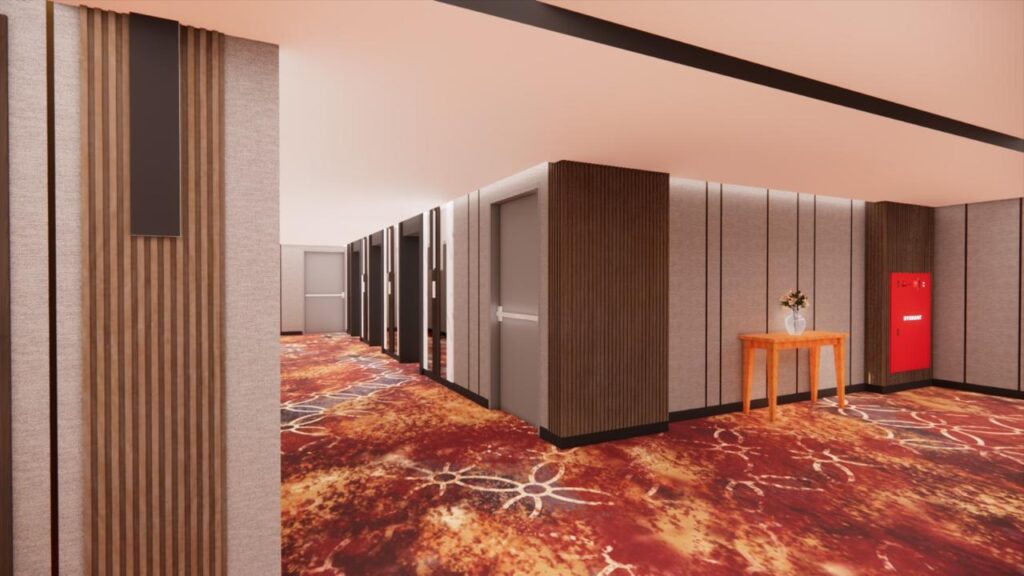
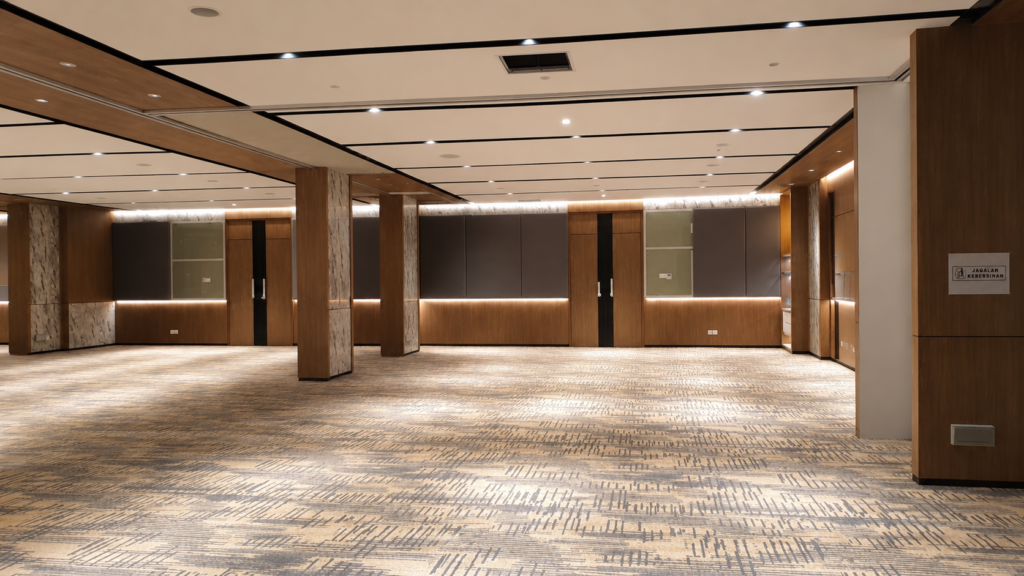
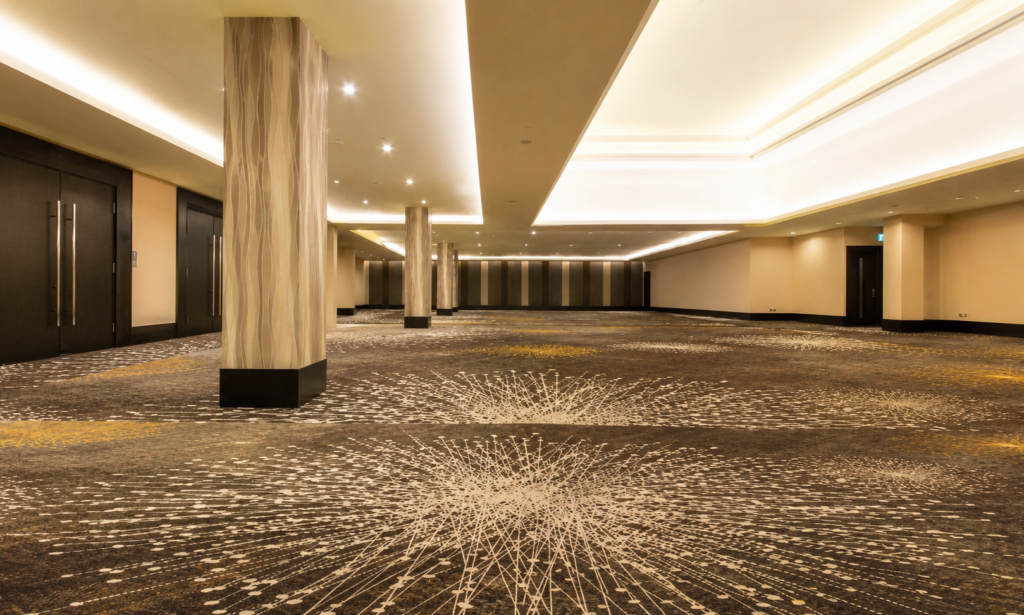
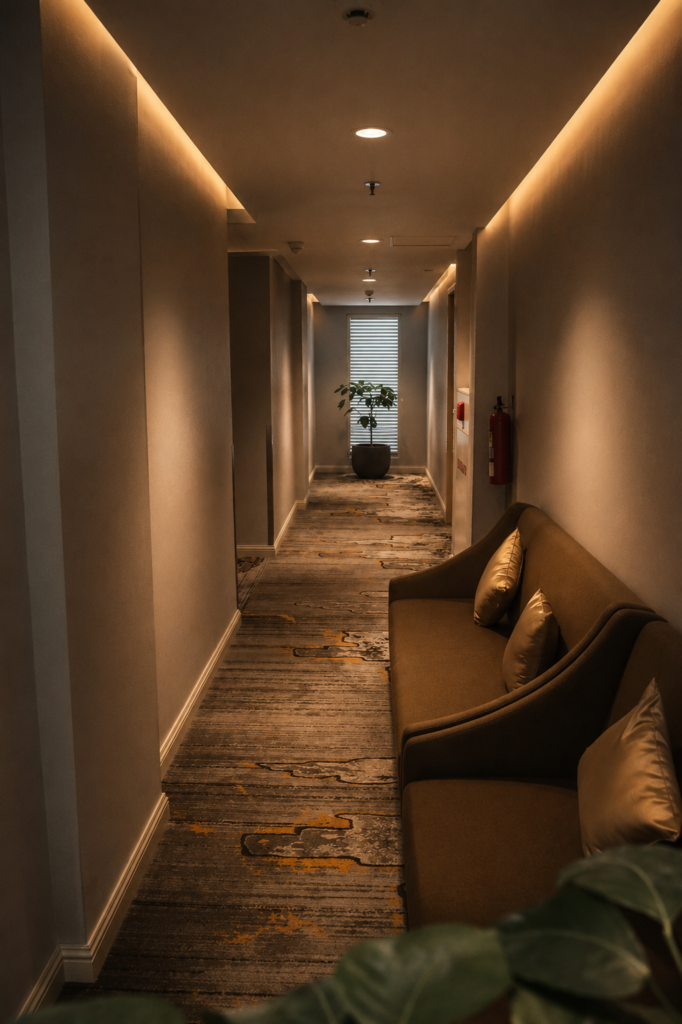
- Pattern Matching Waste Percentage: For broadloom carpet rolls with large graphic patterns (such as hotel corridors or ballrooms), the waste factor can reach 12% – 18%. Overlooking this will lead to material shortages mid-installation.
- Out-of-Town Freight & Mobilization: Projects located outside major metropolitan hubs require container shipping fees, logistics management, and accommodation for specialized installation teams.
- Night Shift & After-Hours Overtime: For operational hotel or office renovations, installation must often take place during night shifts to avoid disrupting daily operations, which impacts labor rates.
- Floor Transitions (Transition Strips & Nosing): Joints between carpets and other flooring materials (such as marble or tile) require specialized aluminum or brass transition profiles.
3. How to Calculate Estimated Total Carpet Project Budget
Use the following simple formula to estimate your rough project budget:
| Calculation Step | Formula | Simulation Example (1,000 m² Hotel Corridor) |
| 1. Total Carpet Material Area | Net Area x (1 + % Waste Factor) | 1,000 m² x 1.15 (15% Waste) = 1,150 m² |
| 2. Total Carpet Material Cost | Material Area x Material Price / m² | 1,150 m² x IDR 700,000 = IDR 805,000,000 |
| 3. Total Underlayer Cost | Material Area x Underlayer Price / m² | 1,150 m² x IDR 85,000 = IDR 97,750,000 |
| 4. Installation & Accessories Cost | Net Area x Labor Rate / m² | 1,000 m² x IDR 65,000 = IDR 65,000,000 |
| ESTIMATED TOTAL BUDGET | Sum of Steps 2 + 3 + 4 | IDR 967,750,000 |
4. Tips to Optimize Your Budget Without Sacrificing Quality
- Implement Value Engineering (VE) Strategies: Use premium specifications (such as Axminster 80/20) in high-visibility public areas and ballrooms, while opting for high-durability Solution Dyed Nylon (SDN) tufted carpets in guest rooms.
- Source Directly from Scale Manufacturers: Cutting out middleman distributors can save 15–25% on material costs.
- Optimize Pattern Scale (Repeat Pattern): Work closely with Classic Carpets’ design team to adjust pattern scales and minimize cutting waste percentages.
5. Frequently Asked Questions (FAQ)
Q: Does the carpet price include installation?
A: In the commercial industry, material prices are typically quoted separately from installation services, underlayer, and accessories to provide full transparency to clients.
Q: What is the ideal carpet waste factor percentage?
A: Carpet Tiles generally require 3–5%, plain broadloom roll carpets require 8–10%, and custom patterned broadloom (Axminster/ColorPoint) requires 12–18% depending on room layout and pattern repeats.
Q: Are there price penalties for small custom orders?
A: Custom Axminster orders below the Minimum Order Quantity (MOQ) incur machine setup surcharges. However, Classic Carpets’ advanced ColorPoint technology offers custom design solutions with significantly more flexible MOQs.
Get an Official Proposal & Budget Estimate for Your Project
Looking for an accurate and transparent Bill of Quantities (BOQ / RAB) for your commercial carpet project?
- Get an Official Estimate in 24 Hours: Send your project floor plans/layouts directly to Classic Carpets’ engineering team.
- Free Value Engineering Consultation: Receive tailored specification recommendations to optimize costs without compromising on visual aesthetics and durability.